
Orange — quality detection
Defects detected on Orange, each identified separately and sorted out as required.
Every defect is recognised separately
The system does not simply split produce into "defective / sound". It recognises each defect type on its own and distinguishes them from one another — russet is not treated the same as sunburn, a bruise is not treated the same as rot.
Tarend's AI integration runs on models trained with deep learning. Because those models are trained on real production data gathered from many machines, across multiple seasons and varieties, accuracy is very high and does not depend on operator experience. As the dataset grows, the system becomes more accurate every season.
The sorting decision stays yours: the operator selects on screen which defect is rejected and which grade each one goes to. The same line can run with different quality thresholds for different customers and markets.
On this page
- 5 external defects — with images
- 10 grading screen captures
- 13 further defects — recognised by the system
External quality defects
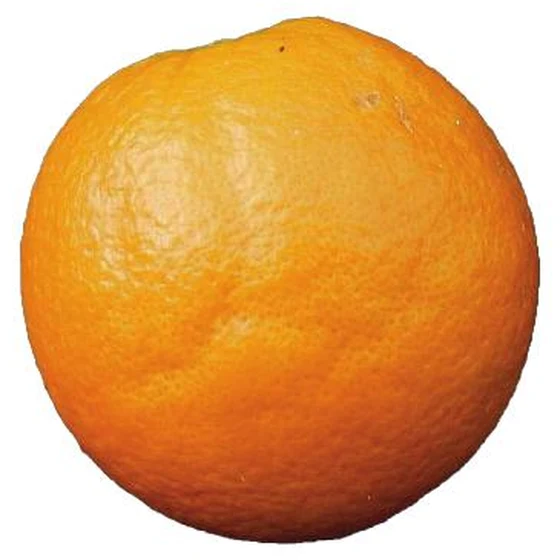
Each image shows a different defect. These surface defects are detected by high-resolution multi-spectral cameras that scan every surface of the produce.
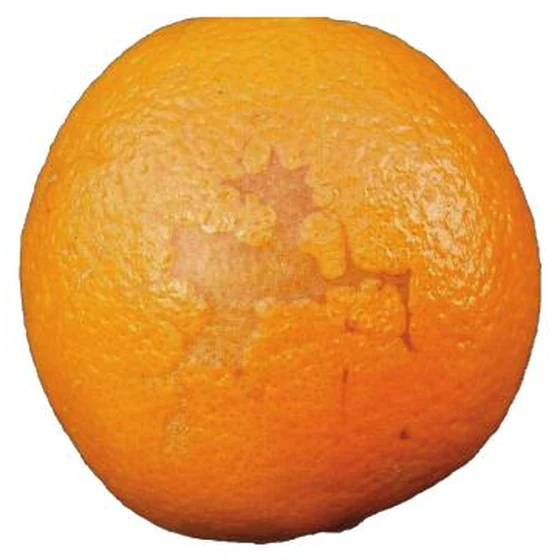
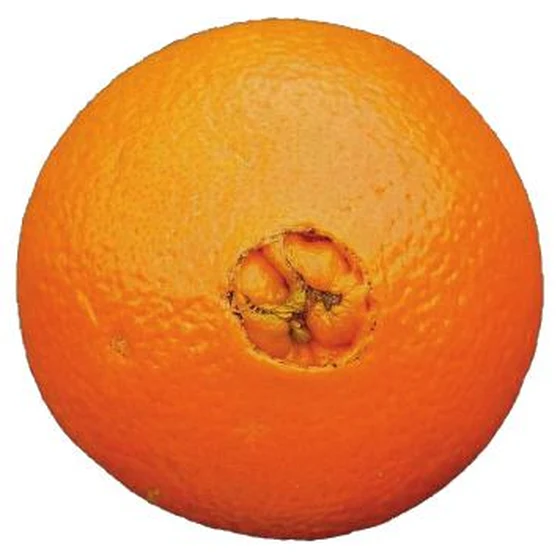
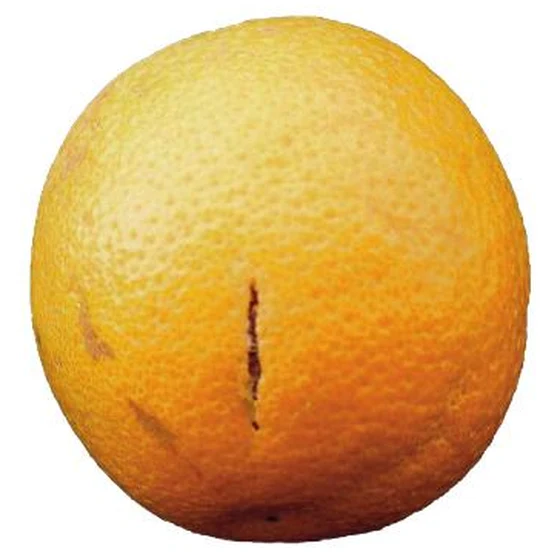
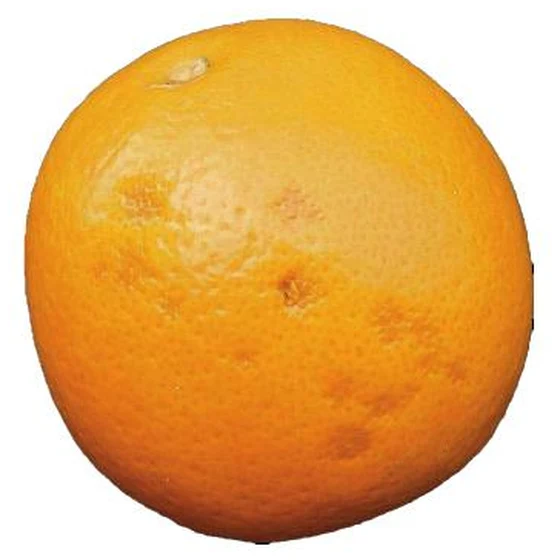
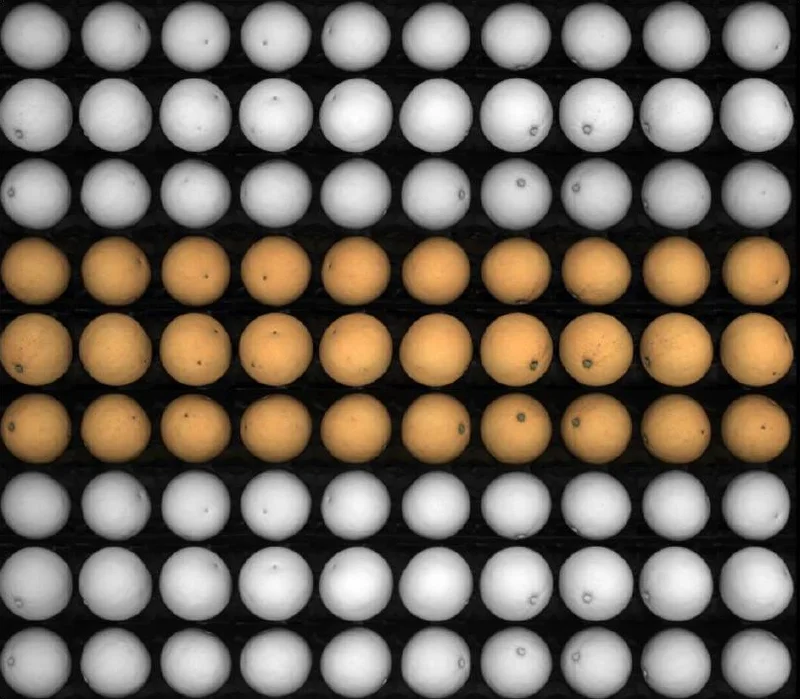
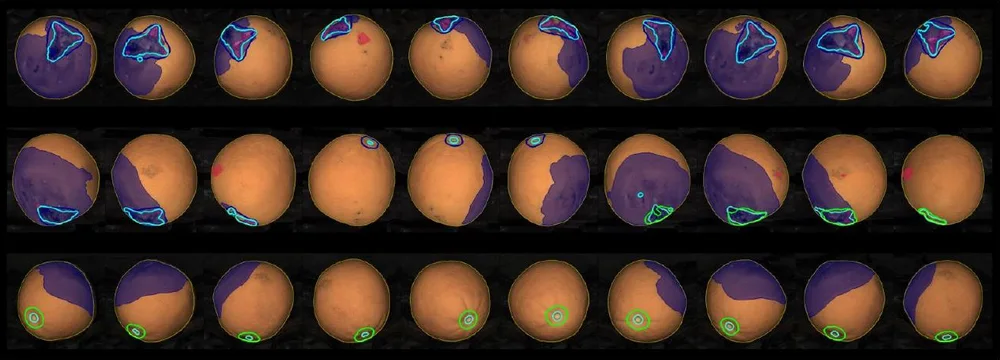
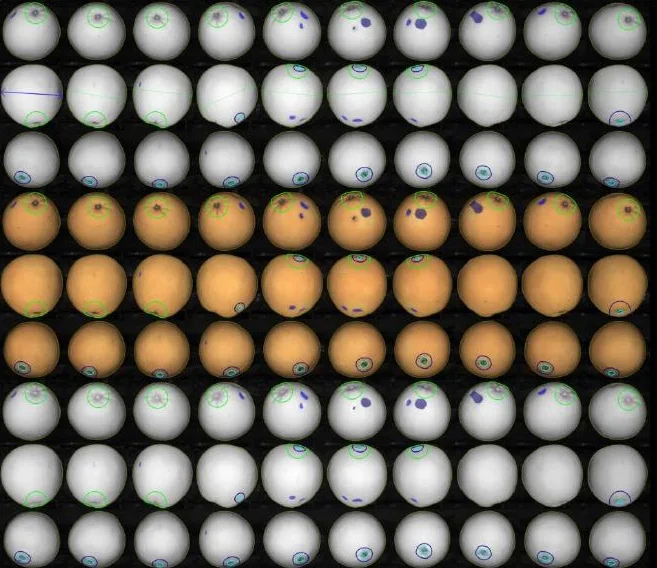
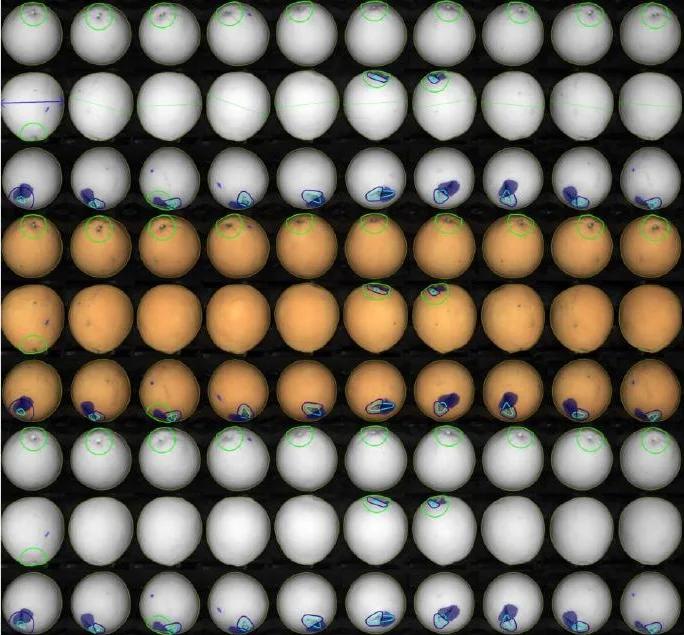
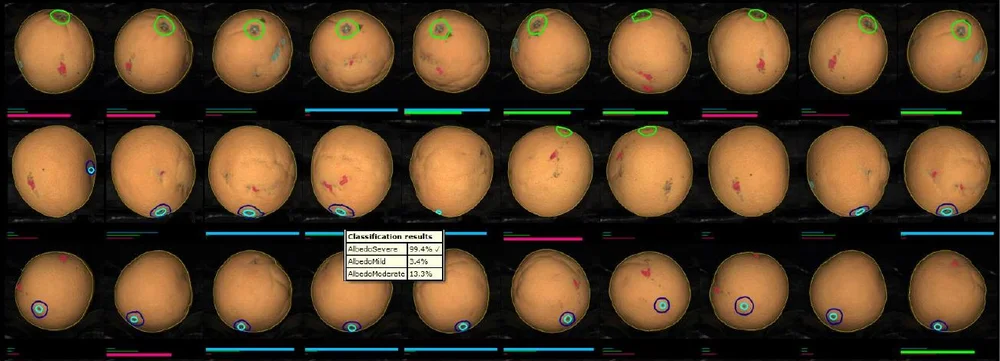
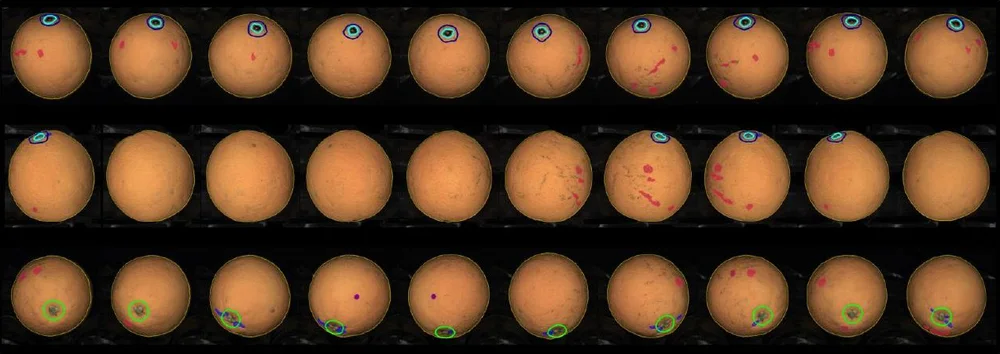
What the operator sees during grading
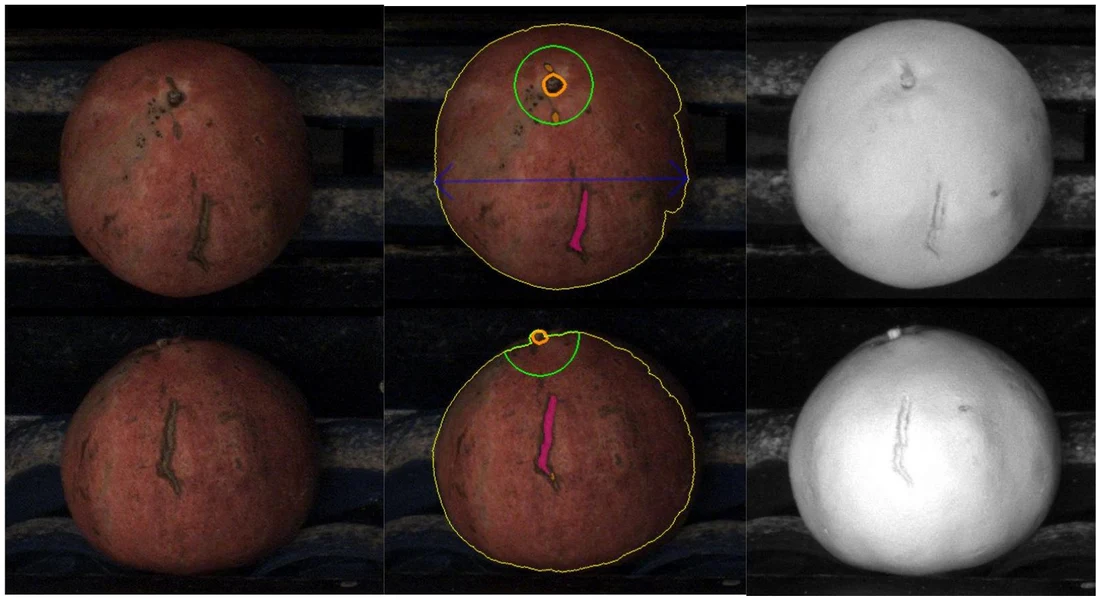
The captures below are taken during real grading runs. They show how the system sees each piece of produce and how it marks the defect.
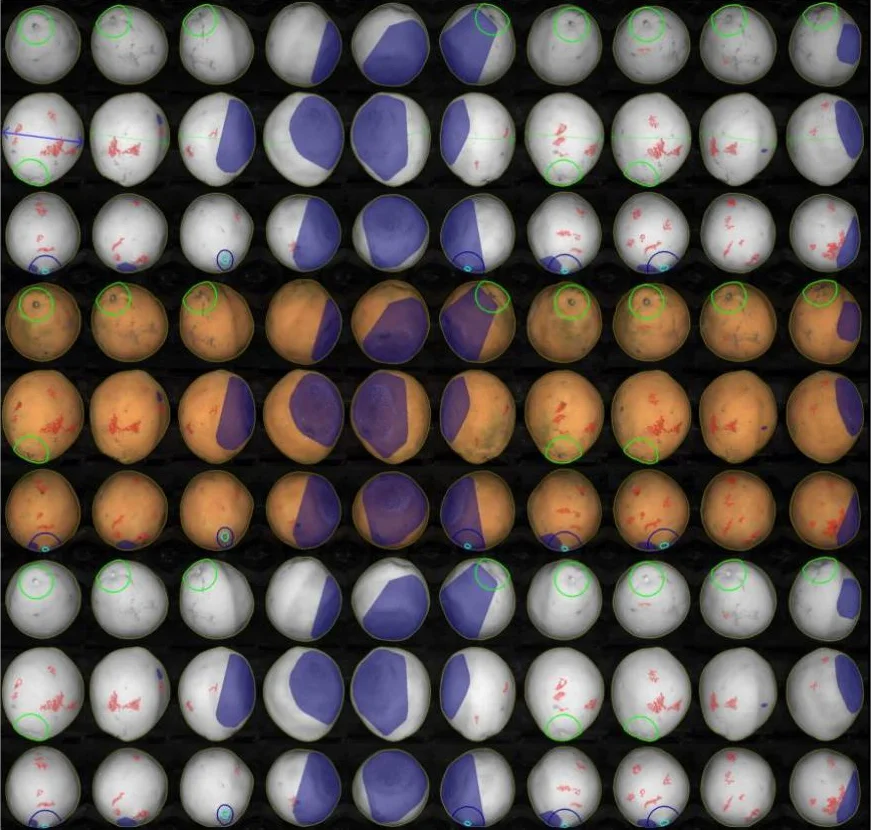
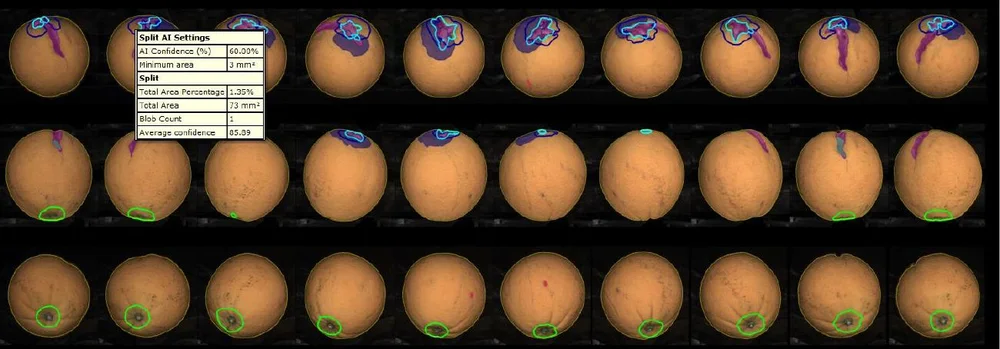
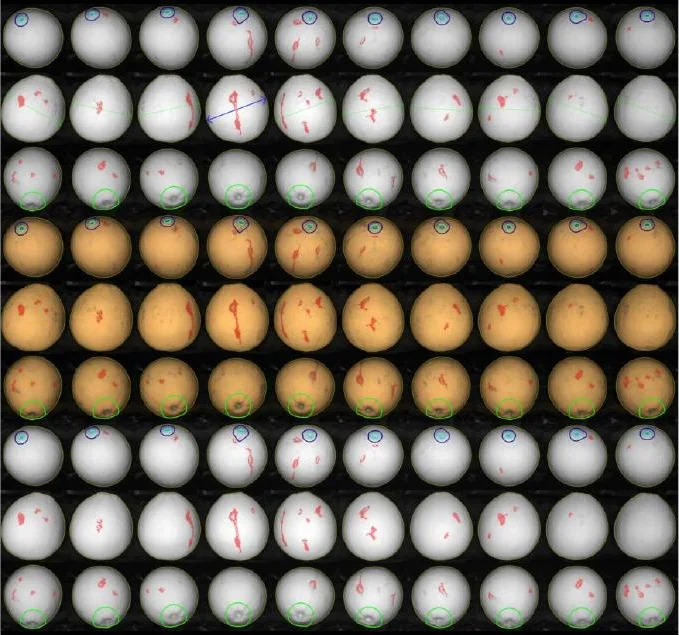
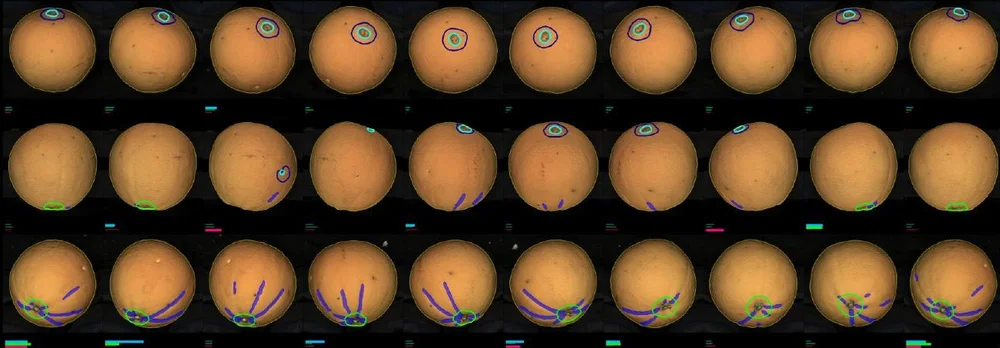
Further defects without an image on this page
Corrugations · Mold · Crease · End checks · Torn stem · Brown rot · Clear rot · Katydid marks · Thrip scar · Scarring · Stalk · Calyx · Color/presence of stem
These defects are recognised by the system; only defects with a uniquely named image in the source documents are shown on this page.
Other produce
Let’s plan your line together
From needs analysis to commissioning — focused on measurable performance and fast return on investment.